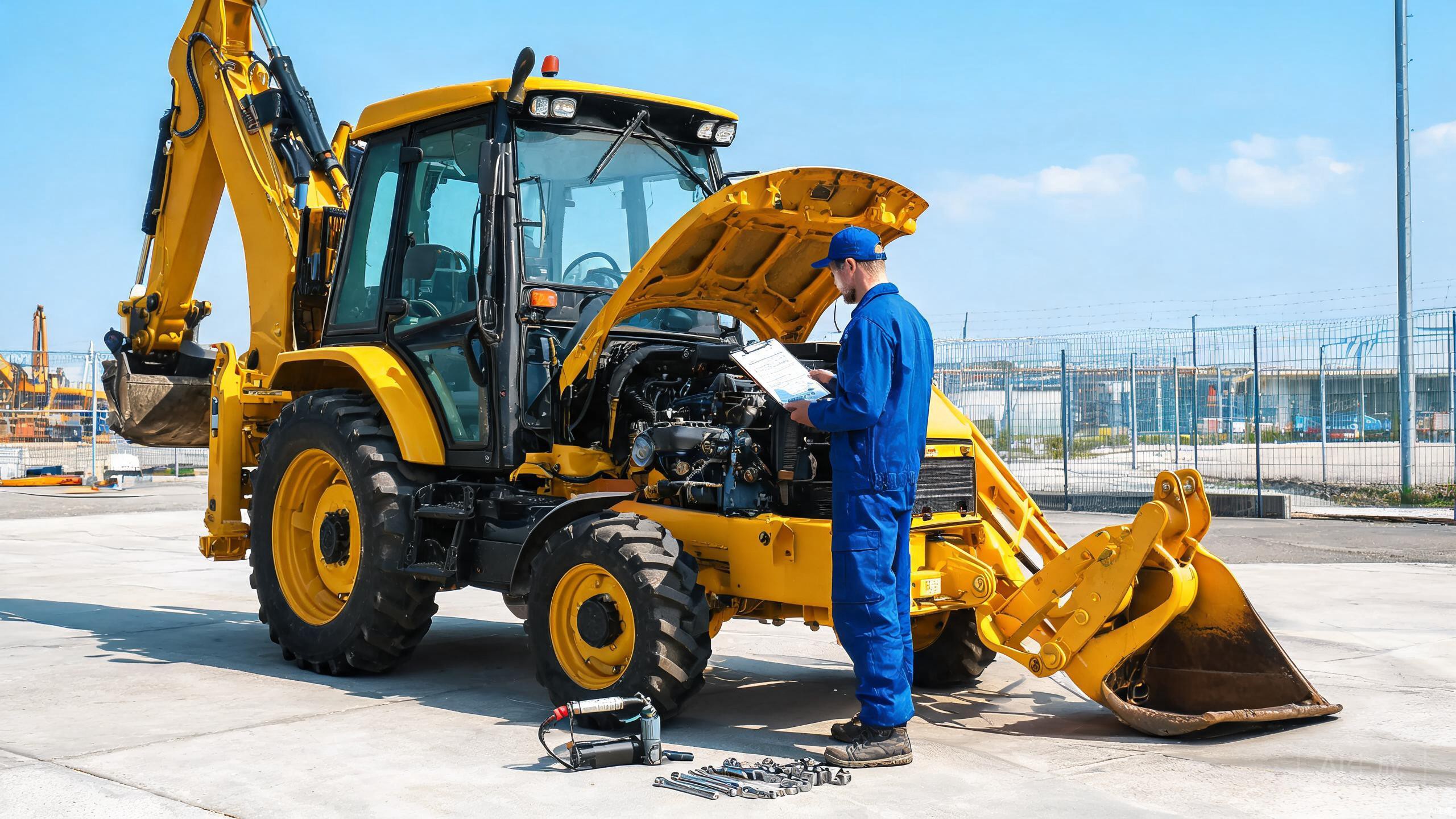
Why Backhoe Loader Maintenance Matters
A backhoe loader is one of the most versatile and hardworking machines on any construction site. From digging trenches and loading trucks to breaking asphalt and handling materials, it handles multiple tasks every single day. That versatility, however, comes with a cost: the machine wears down quickly if it is not properly maintained.
At Qingdao Jinlong Import & Export Co., Ltd., we have spent 18 years manufacturing and exporting backhoe loaders to more than 100 countries. Our 88,000-square-meter factory produces machines engineered for tough conditions, but even the best-built equipment needs regular care. Across Africa, Southeast Asia, the Middle East, and South America, the operators who get the most value from their machines are the ones who follow a disciplined maintenance routine.
This checklist covers everything from daily walk-arounds to annual major services. Follow it consistently and you will prevent costly breakdowns, extend the service life of your machine by years, and protect your investment.
Daily Maintenance Checklist
Daily checks are your first line of defense against unexpected failures. They take only 10 to 15 minutes and should be performed every shift before the machine starts work. Walk around the machine systematically, beginning at the front and moving clockwise.
| Component | What to Check | Action Required |
|---|---|---|
| Engine oil | Level on dipstick, color and consistency | Top up if below minimum; change if dark and gritty |
| Hydraulic fluid | Sight glass or dipstick level | Top up with recommended ISO-grade hydraulic oil |
| Coolant | Level in overflow tank, color | Top up with proper coolant mix; never open when hot |
| Tires or tracks | Pressure, tread depth, damage, embedded objects | Inflate to spec; remove debris; replace if damaged |
| Lights | Headlights, taillights, beacon, work lights | Replace bulbs; check wiring connections |
| Horn | Sound test | Repair or replace if not working |
| Seat belt | Webbing condition, buckle function | Replace if frayed or buckle fails |
| Backup alarm | Engage reverse gear and listen | Repair immediately if silent |
| Hydraulic hoses | Leaks, cracks, blisters, abrasion | Replace damaged hoses before failure |
| Leaks | Ground under machine, engine bay, hydraulic tank | Identify source; repair before operating |
| Grease points | Zerk fittings on pins, bushings, boom, dipper | Apply lithium grease until clean grease pushes out |
Pro tip: Keep a clipboard or digital tablet in the cab. Note any issues immediately so the next operator knows what to watch. Small problems caught today prevent big repair bills next week.
Weekly Maintenance Checklist
Weekly tasks go deeper than the daily walk-around. Set aside 30 to 45 minutes at the end of the work week, or every 40 to 50 operating hours, to complete these checks.
Battery and Electrical System
- Inspect battery terminals for corrosion and clean with a wire brush if needed
- Check electrolyte level in non-sealed batteries; top up with distilled water
- Measure battery voltage with a multimeter; a healthy battery reads 12.6 volts or higher when the engine is off
- Verify all wiring harnesses are secure and free from chafing
Air Filter
- Remove the outer air filter element and inspect for dust buildup and damage
- Clean with compressed air from the inside out if lightly soiled, or replace if heavily clogged
- Check the air intake hose for cracks and loose clamps
- In dusty environments such as mining sites or desert regions, inspect the filter more frequently
Fuel Filter
- Inspect the fuel filter bowl for water and sediment
- Drain the water separator if equipped
- Replace the fuel filter element if the engine shows signs of fuel starvation or rough idling
Hydraulic Filter
- Check the hydraulic return filter indicator if equipped; replace if the indicator shows restriction
- Inspect the hydraulic tank breather for blockage
Belt Tension
- Press on the fan belt midway between pulleys; deflection should be 10 to 15 millimeters
- Inspect belts for cracks, glazing, and fraying
- Adjust tensioner or replace belts showing wear
Tire Pressure
- Check all tires with a calibrated pressure gauge
- Inflate to the pressure specified on the machine data plate or operator manual
- Inspect for uneven wear, which may indicate alignment or suspension issues
Monthly or 50-Hour Maintenance
The monthly service interval is where preventive maintenance becomes proactive. These tasks typically require 1 to 2 hours and should be logged in your maintenance records.
Engine Oil and Filter Change
- Drain engine oil while warm so contaminants flow out with the oil
- Replace the oil filter with a genuine or equivalent-specification filter
- Refill with the viscosity grade recommended for your climate, typically 15W-40 for most operating conditions
- Run the engine for a few minutes and recheck the level
Filter Replacements
- Replace the fuel filter element
- Replace the hydraulic return filter
- Inspect and clean the cab fresh-air filter if equipped
- Replace the inner air filter safety element annually or if damaged
Hydraulic System Check
- Operate all hydraulic functions through full cycles and listen for unusual noises
- Check cylinder rod surfaces for scoring and chrome flaking
- Inspect quick-connect couplings for leakage and proper engagement
- Verify hydraulic oil temperature stays within normal range during operation
Brake Inspection
- Test service brakes for firm pedal feel and adequate stopping power
- Check parking brake holding ability on an incline
- Inspect brake fluid level and condition; replace if contaminated
- Examine brake lines for leaks and physical damage
Electrical Connections
- Inspect alternator output; should read 13.8 to 14.4 volts with the engine running
- Check starter motor connections for tightness and corrosion
- Clean and tighten ground cable connections
- Test all gauges and warning lights for proper function
Quarterly or 250-Hour Maintenance
Quarterly service addresses systems that experience gradual wear. These tasks are best performed by a trained technician or an experienced operator with proper tools.
Transmission Fluid
- Check transmission oil level through the sight glass or dipstick
- Look for discoloration, metallic particles, or a burnt smell
- Change transmission fluid and filter every 1,000 hours or annually, whichever comes first
- Use only the transmission fluid grade specified by the manufacturer
Axle Oil
- Check front and rear axle oil levels at the fill plug
- Inspect for water contamination, which appears as a milky discoloration
- Replace axle oil if water is present or every 2,000 hours
- Check axle breather vents for blockage
Cooler Cleaning
- Remove debris from the hydraulic oil cooler and radiator fins using compressed air or low-pressure water
- Inspect for bent fins and straighten carefully with a fin comb
- Verify fan operation and shroud integrity
- A clean cooling system prevents overheating, which is a leading cause of hydraulic and engine failure
Injector and Fuel System Check
- Listen for injector knock or misfire
- Check fuel injection pump for leaks
- If equipped, review engine diagnostic codes through the display panel
- Have a qualified technician perform injector calibration if performance drops
Annual or 1,000-Hour Maintenance
The annual major service is the most comprehensive maintenance event. It should be scheduled during a planned downtime period and performed by qualified personnel. Expect it to take a full day or more.
Major Service Items
- Replace all fluids: engine oil, transmission fluid, hydraulic oil, axle oil, coolant, and brake fluid
- Replace all filters: oil, fuel, hydraulic, air outer, and air inner safety element
- Flush and clean the hydraulic tank interior
- Inspect and repack wheel bearings
- Check and adjust steering linkage and toe-in
Valve Adjustment
- Adjust engine valve clearances to specification
- Inspect valve train components for wear
- Replace valve cover gasket if leaking
Turbocharger Inspection
- Check turbocharger for excessive shaft play and oil leakage
- Inspect intake and exhaust connections for boost leaks
- Clean or replace the turbocharger oil feed and return lines
Additional Annual Tasks
- Inspect the machine structure for cracks, especially at high-stress points such as the boom, dipper, and loader arm mounting
- Check all pins and bushings for wear and replace if beyond tolerance
- Inspect the operator cab structure, ROPS, and FOPS certifications
- Review and update the machine software if applicable
Seasonal Maintenance Considerations
Backhoe loaders operate across diverse climates, from the heat of the Sahara to the cold of high-altitude regions. Seasonal preparation keeps your machine reliable year-round.
Winterization
- Switch to lower-viscosity engine oil, such as 10W-30 or 5W-40, for cold starts
- Use winter-grade diesel fuel with appropriate cold-flow additives to prevent gelling
- Check and replace the engine block heater if temperatures drop below freezing
- Inspect battery health, as cold temperatures reduce cranking power significantly
- Store hydraulic cylinders retracted to protect exposed rods from ice and corrosion
- Add antifreeze to the coolant system rated for the lowest expected temperature
Summer Preparation
- Verify coolant concentration and condition; flush and replace if degraded
- Clean all cooling surfaces thoroughly to handle peak ambient temperatures
- Switch to higher-viscosity hydraulic oil if operating in extreme heat above 40 degrees Celsius
- Inspect air conditioning system in the cab; recharge refrigerant if needed
- Check tire pressure more frequently, as heat causes pressure to rise
Common Problems and Early Warning Signs
Catching problems early is the difference between a quick fix and a major repair. Train your operators to recognize these warning signs and report them immediately.
| Symptom | Likely Cause | Recommended Action |
|---|---|---|
| Engine overheating | Low coolant, clogged radiator, faulty thermostat | Check coolant, clean cooler, replace thermostat |
| Hydraulic response slow | Low fluid, clogged filter, worn pump | Check level, replace filter, test pump pressure |
| Unusual engine noise | Low oil, worn bearings, valve issues | Stop engine immediately, check oil, inspect |
| Transmission slipping | Low fluid, worn clutch, contaminated oil | Check fluid, sample oil, service transmission |
| Brakes feel spongy | Air in lines, low fluid, worn pads | Bleed brakes, top up fluid, inspect pads |
| Excessive smoke | Wrong fuel grade, dirty injectors, worn rings | Check fuel, clean injectors, compression test |
| Loader drifts down | Cylinder seal leak, valve issue | Inspect cylinders, test control valve |
| Electrical failures | Loose grounds, corroded connections, weak battery | Clean terminals, tighten grounds, load test battery |
Rule of thumb: Never ignore a new noise, smell, or vibration. Investigate immediately. A 20-dollar sensor or seal replaced today can prevent a 2,000-dollar component failure next month.
Maintenance Log Best Practices
A maintenance log is not just paperwork. It is a critical tool that protects your investment, supports warranty claims, and increases resale value. Every machine that leaves our factory comes with a service manual, and we strongly recommend keeping detailed records from day one.
What to Record
- Date and operating hours for every service
- Parts replaced, including part numbers and quantities
- Fluids used, including brand, grade, and volume
- Name of the technician or operator who performed the work
- Any unusual observations or pending issues
Digital vs. Paper Logs
Paper logs are simple and reliable, but digital systems offer powerful advantages. A spreadsheet or dedicated fleet management app lets you set automatic service reminders, track costs per machine, and generate reports for tax and insurance purposes. For fleets with multiple machines, digital logging is strongly recommended.
Keep Receipts
Retain invoices for all parts and fluids. These documents prove that maintenance was performed and are often required for warranty coverage. They also help calculate the true cost of ownership when evaluating future purchases.
The Long-Term Benefits of Proper Maintenance
Proper maintenance is not an expense; it is an investment with measurable returns. Consider what happens when you follow the checklist in this guide consistently:
- Reduced downtime: A well-maintained machine spends more hours working and fewer hours in the shop. For a contractor billing by the project, every day of downtime is lost revenue.
- Lower repair costs: Preventive maintenance catches small issues before they become major failures. A 50-dollar filter change prevents a 5,000-dollar engine rebuild.
- Extended service life: Machines that receive regular care routinely last 30 to 50 percent longer than neglected equipment. A backhoe loader that should serve for 8,000 hours can reach 12,000 hours or more with disciplined maintenance.
- Higher resale value: Buyers pay a premium for machines with complete service records. A documented maintenance history can add thousands of dollars to your trade-in or sale price.
- Improved safety: Worn brakes, leaking hydraulics, and faulty electrics are not just costly; they are dangerous. Regular maintenance protects your operators and your liability.
- Better fuel efficiency: Clean filters, proper tire pressure, and well-tuned engines burn less fuel. Over a year of operation, the savings are significant.
At Jinlong, we build backhoe loaders to work hard and last long. Our machines carry CE and ISO certification and are engineered for the demanding conditions found across Africa, Southeast Asia, the Middle East, and South America. But the best machine in the world will underperform if it is not maintained. Follow this checklist, keep your records, and your Jinlong backhoe loader will deliver reliable service for years to come.
For parts, service manuals, or technical support, contact our after-sales team. We ship genuine replacement parts worldwide and provide remote troubleshooting assistance to keep your operations running smoothly, wherever you are.