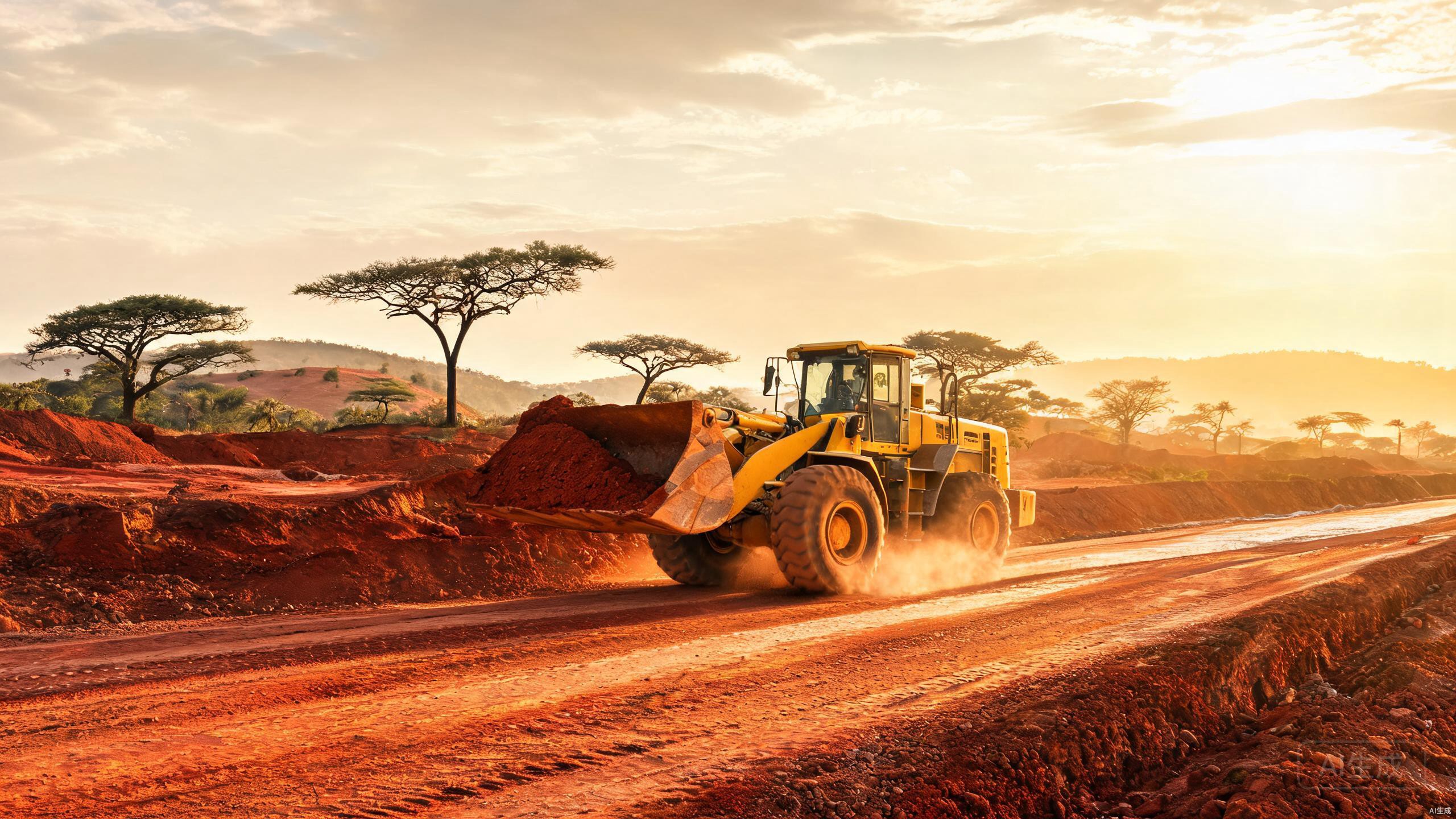
Africa's Construction Boom: A Market on the Rise
Africa is experiencing one of the most significant construction transformations of the 21st century. With a population projected to surpass 2.5 billion by 2050 and urbanization rates accelerating across the continent, the demand for housing, transportation networks, and commercial infrastructure has reached unprecedented levels. According to the African Development Bank, the continent needs infrastructure investment of $130–$170 billion annually to close its current gap — and actual spending continues to climb year over year.
Six of the world's ten fastest-growing economies are now in Africa, and this growth is fueling a wave of public and private construction. From the bustling construction sites of Lagos to the new highway corridors of Kenya, African governments and private developers are committing record budgets to building the foundations of modern economies. For construction machinery exporters, this translates into sustained, long-term demand for equipment that is reliable, affordable, and suited to local operating conditions.
This is not a short-term spike. Demographic trends, urbanization, and infrastructure deficits ensure that demand for construction machinery will remain strong for decades. Buyers and dealers who establish reliable supply relationships now will be best positioned to capture this growth.
Key Infrastructure Projects Driving Demand
Three sectors are the primary engines of equipment demand across Africa, and each presents distinct machinery requirements.
Roads and Transportation
National governments, backed by funding from the African Development Bank and China's Belt and Road Initiative, are expanding road networks connecting inland production zones to coastal ports. Projects like Nigeria's 700-kilometer Lagos-Calabar coastal highway, Kenya's Northern Bypass, and Tanzania's standard-gauge railway extensions require thousands of machines over multi-year timelines. Road construction alone accounts for the largest share of heavy equipment demand, with wheel loaders, excavators, and motor graders in continuous use.
Housing and Urban Development
Rapid urban growth has created a housing deficit estimated at 51 million units. Government-led affordable housing programs in Ghana, Ethiopia, and South Africa are driving steady demand for compact excavators, concrete-handling loaders, and material-handling forklifts. Because many of these projects are located in dense urban areas with narrow access roads, compact and maneuverable machines are preferred over larger equipment.
Mining and Quarrying
Africa holds 30% of the world's mineral reserves, including the majority of global cobalt, platinum, and diamond production. Expanding artisanal and industrial mining operations require robust wheel loaders, backhoe loaders, and material-handling equipment capable of operating in remote, high-dust environments. Mining demand is especially strong in the Democratic Republic of Congo, Zambia, South Africa, and Ghana, where equipment must endure extreme conditions with minimal servicing infrastructure.
Most Demanded Machine Types in Africa
Based on our export data and regional buyer inquiries, the following equipment categories see the strongest demand in African markets:
| Machine Type | Typical Use | Why It's Popular in Africa |
|---|---|---|
| Mini Excavator (1.8–3.5 ton) | Trenching, foundation work, urban sites | Compact size suits narrow streets; affordable; easy to transport on standard trucks |
| Wheel Loader (3–5 ton) | Material handling, road prep, quarry work | Versatile; handles rough terrain; strong resale value across the region |
| Backhoe Loader | Multi-purpose digging and loading | One machine replaces two; ideal for contractors with limited budgets and storage |
| Forklift (3–5 ton) | Warehouse, port, and logistics handling | Essential for growing trade hubs and manufacturing zones near coastal cities |
| Agricultural Tricycle | Farm transport, small-scale hauling | Low cost; runs on rough rural roads; high demand in farming regions |
Mini excavators and wheel loaders consistently lead our African export volumes, as they serve the broadest range of applications from urban housing to rural road maintenance.
What African Buyers Prioritize
African buyers operate in environments where equipment downtime is costly and service networks are sparse. A machine that sits idle for two weeks waiting for a spare part can derail an entire project schedule. When evaluating machinery, buyers consistently prioritize the following factors:
- Affordability — Total cost of ownership, including purchase price, shipping, duties, and taxes, must fit tight project budgets. Import duties in many African countries range from 10% to 25%, making factory-direct pricing a decisive advantage. Buyers calculate the landed cost, not just the ex-works price.
- Durability — Equipment must withstand high temperatures, dusty conditions, and uneven terrain. Reinforced frames, sealed hydraulic components, and oversized cooling systems are non-negotiable for machines operating in temperatures that regularly exceed 40 degrees Celsius.
- Parts Availability — Quick access to spare parts keeps machines running. Buyers prefer suppliers who maintain regional parts inventories or can ship critical components within 5–7 days. A reliable parts supply chain is often the single most important factor in supplier selection.
- Fuel Efficiency — Fuel is often expensive and supply can be inconsistent in remote areas. Efficient engines reduce operating costs significantly over a machine's lifecycle, and diesel consumption is closely monitored on large projects.
- Ease of Maintenance — Simple, serviceable designs allow local mechanics to perform routine maintenance and minor repairs without specialized diagnostic tools. Machines that require dealer-only servicing are often impractical in regions with limited service networks.
Why Chinese Machinery Is Well-Positioned
Chinese construction machinery has become the preferred choice for many African buyers, and the reasons go beyond price alone. Over the past decade, Chinese manufacturers have made dramatic improvements in build quality, adopting robotic welding, multi-layer anti-corrosion painting, and CE-certified components that meet European standards.
The combination of competitive factory-direct pricing, CE/ISO certification, and proven durability in tropical and arid climates gives Chinese machinery a compelling value proposition that bridges the gap between low-cost alternatives and premium European brands. Jinlong's equipment, for example, is engineered with reinforced undercarriages, oversized cooling systems, and sealed electrical components specifically suited to African operating conditions.
Additionally, Chinese suppliers have invested heavily in after-sales support, offering video-based technical guidance, detailed parts catalogs with part numbers, and express parts shipping to ensure minimal downtime. This support model is well matched to the realities of African construction sites, where fast remote assistance can prevent costly delays.
Key Markets: Where Demand Is Concentrated
While opportunity exists across the continent, demand is strongest in the following countries:
- Nigeria — Africa's largest economy by GDP; strong demand for road construction, housing, and material-handling equipment
- Ghana — Politically stable and fast-growing; mining and infrastructure projects expanding rapidly
- Kenya — East Africa's logistics hub; highway and port development driving sustained loader demand
- Tanzania — Growing agricultural and construction sectors; tricycles and small loaders in high demand
- Ethiopia — Large population and major government housing programs; demand for compact excavators rising
- South Africa — Most mature market with mining, construction, and logistics applications requiring mid-size equipment
Payment and Financing Considerations
Cross-border machinery trade requires careful attention to payment methods and cash flow management. The most common options for African buyers include:
- Telegraphic Transfer (T/T) — 30% deposit with 70% balance before shipment; fast and widely accepted for standard orders
- Letter of Credit (L/C) — Provides security for both buyer and seller; preferred for larger orders and government tenders
- Trade Assurance — Alibaba's escrow-style protection that safeguards buyer funds until shipment is confirmed and goods are received
Buyers should also account for shipping (CIF or FOB), marine insurance, customs duties, VAT, and local registration costs when budgeting. These additional costs can add 20–35% to the ex-works price. Jinlong's trade specialists assist with all export documentation, including commercial invoices, packing lists, bills of lading, and certificates of origin, to ensure smooth customs clearance at the destination port.
Tips for African Buyers Importing Machinery
- Verify supplier credentials — Confirm the manufacturer holds valid CE and ISO certifications and request factory audit reports or third-party inspection certificates.
- Specify the right configuration — Communicate your operating conditions (temperature range, altitude, terrain type, dust levels) so the supplier configures cooling systems, tires, and attachments accordingly.
- Order critical spare parts with the machine — Filters, belts, hydraulic seals, and wear parts shipped with the initial order save weeks of future downtime and reduce per-unit shipping costs.
- Request operation and maintenance manuals — English manuals with clear diagrams and part numbers help local technicians service equipment correctly and order the right replacements.
- Plan for after-sales support — Choose a supplier offering remote technical assistance via video calls and guaranteed parts response times in writing.
- Consider a pre-shipment inspection — Engage a third-party inspection service (SGS, BV, or TUV) to verify machine condition and specifications before the balance payment is released.
Conclusion
Africa's construction boom is a multi-decade opportunity, and choosing the right machinery partner is essential to capitalizing on it. By focusing on durability, affordability, parts availability, and after-sales support, African buyers can secure equipment that delivers reliable performance for years under challenging conditions. Jinlong's 18 years of manufacturing experience, CE/ISO-certified production, and proven export track record to 100+ countries make us a trusted partner for projects across the continent.
Contact our Africa market specialists today to discuss your equipment requirements, request a detailed quotation, and learn how we can support your next project with the right machinery and dependable after-sales service.