Introduction
When it comes to moving materials on a construction site, wheel loaders and skid steers are two of the most versatile machines available. Both can handle loading, digging, grading, and material transport, but they excel in different situations. Understanding their differences is crucial for making the right investment for your business.
What is a Wheel Loader?
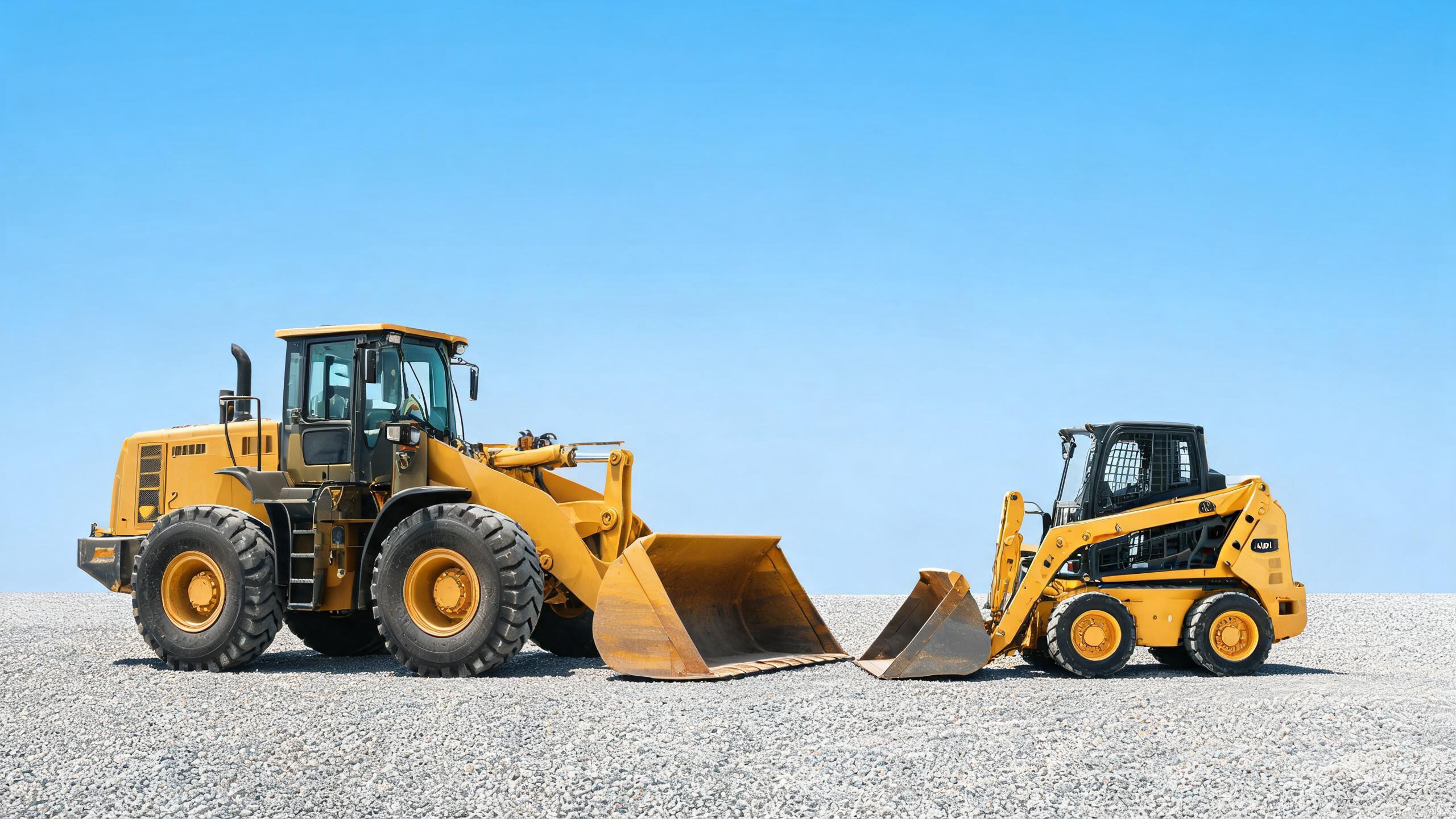
A wheel loader is a heavy-duty machine designed primarily for scooping, transporting, and dumping loose materials such as soil, sand, gravel, and debris. It features a front-mounted bucket connected to articulated steering arms, which provides excellent stability and lifting capacity. Wheel loaders typically range from 1 ton to over 30 tons in operating weight.
Key advantages of wheel loaders:
- Greater lifting capacity and reach
- Better stability on uneven terrain
- Higher travel speeds for material transport
- Articulated steering for excellent maneuverability
- Lower ground pressure, suitable for softer surfaces
What is a Skid Steer?
A skid steer is a compact, rigid-frame machine with lift arms that can accommodate a wide variety of attachments. Skid steers are known for their zero-radius turning capability, making them extremely agile in tight spaces. They typically range from 500 kg to over 3 tons in operating weight.
Key advantages of skid steers:
- Compact size fits in confined spaces
- Zero-radius turning for maximum maneuverability
- Wide range of compatible attachments
- Lower purchase price for similar capacity
- Excellent for grading and leveling work
Head-to-Head Comparison
| Feature | Wheel Loader | Skid Steer |
|---|---|---|
| Lifting capacity | Higher (0.5 - 5+ tons) | Lower (0.3 - 1.5 tons) |
| Maneuverability | Good (articulated) | Excellent (zero-radius) |
| Travel speed | Faster (up to 40 km/h) | Slower (up to 20 km/h) |
| Ground pressure | Lower (wide tires) | Higher (smaller tires) |
| Attachment range | Good | Excellent |
| Operating weight | 1 - 30+ tons | 0.5 - 3 tons |
| Best for | Large-scale material handling | Compact site work |
| Price range | $5,000 - $100,000+ | $4,000 - $60,000+ |
When to Choose a Wheel Loader
A wheel loader is the better choice when your work involves:
- Large-scale material handling: Moving hundreds of tons of aggregate, soil, or debris daily
- High lifting requirements: Loading dump trucks from the side or at height
- Long-distance transport: Carrying materials across large job sites
- Rough terrain: Working on slopes, uneven ground, or soft soil
- Road construction: Where speed and capacity matter more than compact size
Jinlong's wheel loader lineup, from 0.6 ton to 5 ton models, provides options for every scale of operation. Our articulated steering design ensures smooth operation even at full load.
When to Choose a Skid Steer
A skid steer is the better choice when your work involves:
- Urban construction: Working in tight spaces between buildings
- Landscaping: Precise grading, leveling, and material spreading
- Snow removal: With appropriate attachment for walkways and parking lots
- Farming: Barn cleanup, feed handling, and general property maintenance
- Indoor work: Warehouses and barns where low height is required
Attachment Compatibility
Both machines support a variety of attachments, but skid steers generally have the edge in attachment diversity:
- Bucket: Both machines excel with standard buckets
- Pallet forks: Available for both, but skid steers are more common in warehouse settings
- Auger: Skid steers handle post-hole drilling very effectively
- Trencher: Skid steers are ideal for utility trenching in confined areas
- Sweeper: Both can use sweeper attachments for cleanup
Cost of Ownership
When comparing total cost of ownership, consider not just the purchase price but also fuel consumption, maintenance costs, attachment investments, and resale value. Wheel loaders tend to have higher initial costs but lower maintenance per ton of material moved. Skid steers are more affordable upfront but may incur higher maintenance costs due to their compact hydraulic systems.
Conclusion
The choice between a wheel loader and a skid steer ultimately depends on your specific operational needs. For high-capacity material handling and large-scale earthmoving, a wheel loader is the clear winner. For versatile compact work in tight spaces, a skid steer offers unmatched agility. Many successful construction businesses actually own both types of machines to cover all their operational requirements.
At Jinlong, we manufacture both wheel loaders and compact machines suitable for various applications. Contact our sales team to discuss your specific requirements and we will recommend the best equipment solution for your business.